The Remarkable Life of Henry Havelock Bissett
Families often have oral histories that gather around certain individuals. These are short, little narratives that come up again and again. My wife has an ancestor who apparently was thrown from a train by his second wife. My great-grandfather was a butcher who lost the ability to ply his trade after witnessing the horrors of the so-called Great War.
One of the less bleak oral histories that has been told many times in my family is that of the truly unique New Brunswicker, Henry Havelock Bissett (1865-1941). His daughter, Rhea, was my great-grandmother, whom I met as a baby and toddler — one of the few people I have met who was born in the 1800s.
Ever since my kids were little, we used to tell them about how Henry Havelock Bissett was so strong as a ten-year-old that people used to put bets on whether he could lift the ships’ anchors down at the docks. As a five-year old, he was so strong that he could carry his father and baby sister across the room.
I don’t know of course whether or not these stories are true, but just the other day I came across a fantastic article in the November 29, 1929 issue of the Saint John Telegraph-Journal. The article was all about the life of my great-great-grandfather, Henry Havelock Bissett (who also went by “Harry”).
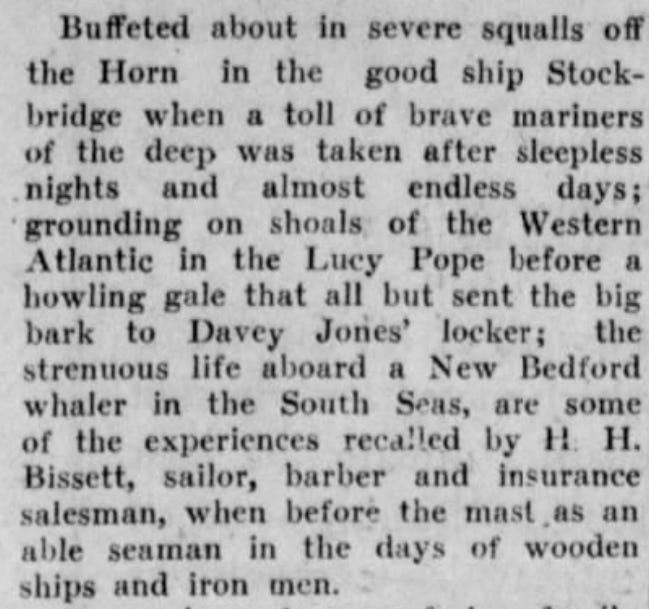
Harry Bissett was the son of Captain Andrew Bissett and his wife Sarah Marie James. Andrew’s ship was a schooner called The Saucy Jack (which is a pretty incredible name), which he apparently built himself when he was in his early 20s. He took lumber in this ship down from the Adams & Davidson mill at Salmon River.
Harry first sailed with his father in the early 1870s. At this point, he would not have been much more than ten years old. Eventually, he joined up with the crew of the Bessie Parker, a ship owned by the shipping agency, Howard D. Troop & Sons.1 Although he doesn’t list all of the places that he travels in his reminisces in the article, there are records of the Bessie Parker visiting England, Ireland, and several locations along the east coast of the United States.
Aboard the Stockbridge
After arriving in the United States, Harry got a discharge from the Bessie Parker and joined the crew of a much larger ship: the Stockbridge. To give you an idea of the difference in scale, the Bessie Parker was 669-tons; the Stockbridge was 2,400-tons. This thing was huge.
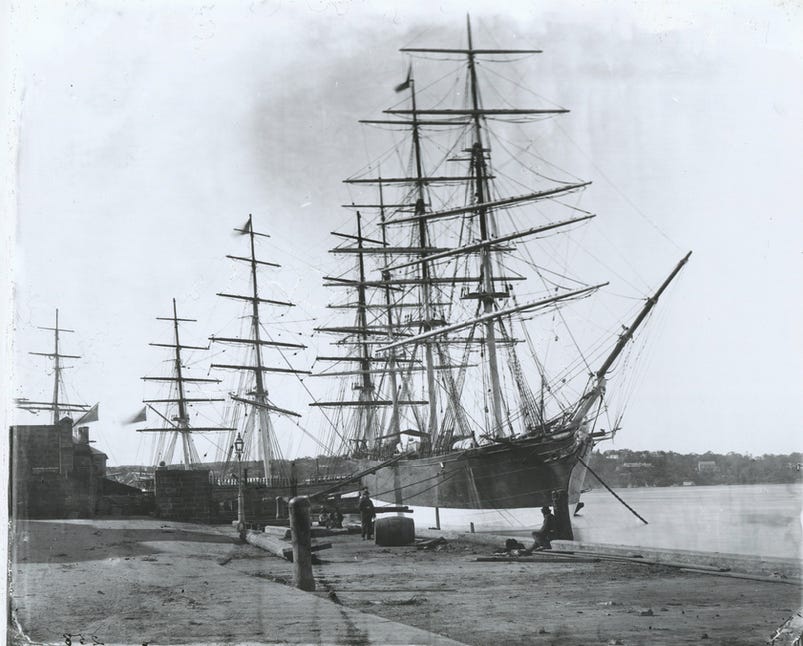
It’s a good thing, too. Harry boarded the ship with plans to sail round trip from the United States, to Liverpool, and then back to San Francisco by way of Cape Horn. Although the article from 1929 doesn’t offer much in the way of dates, I think I may have tracked down the story of this worldwide trip in an old issue of the San Francisco Examiner as it mentions a lot of the points that Harry remembers.
On November 21, 1883, when Harry was 18 years old, the Stockbridge arrived in port in San Francisco — it was not in good shape. On its trip from Liverpool towards Cape Horn, the ship had encountered massive gales off the coast of Argentina, which damaged its hull and tore away the spars — the poles that shape the sails on the ship. This all occurred a few months earlier at the end of July. At the time, it had been able to make its way back to Montevideo, porting there on August 2, 1883.
The 1929 article describes the harrowing ordeal in vivid detail:
Plowing her way into the storm, her bow and stern bobbing up and down with the tossing waves, she encountered the thickest of the hurricane. All hands were ordered on deck as the foremast was snapped by the howling gale, struck the deck and was carried overboard. From then on the sailors manned the pumps and made endeavor to salvage tattered sails ripped by the storm.
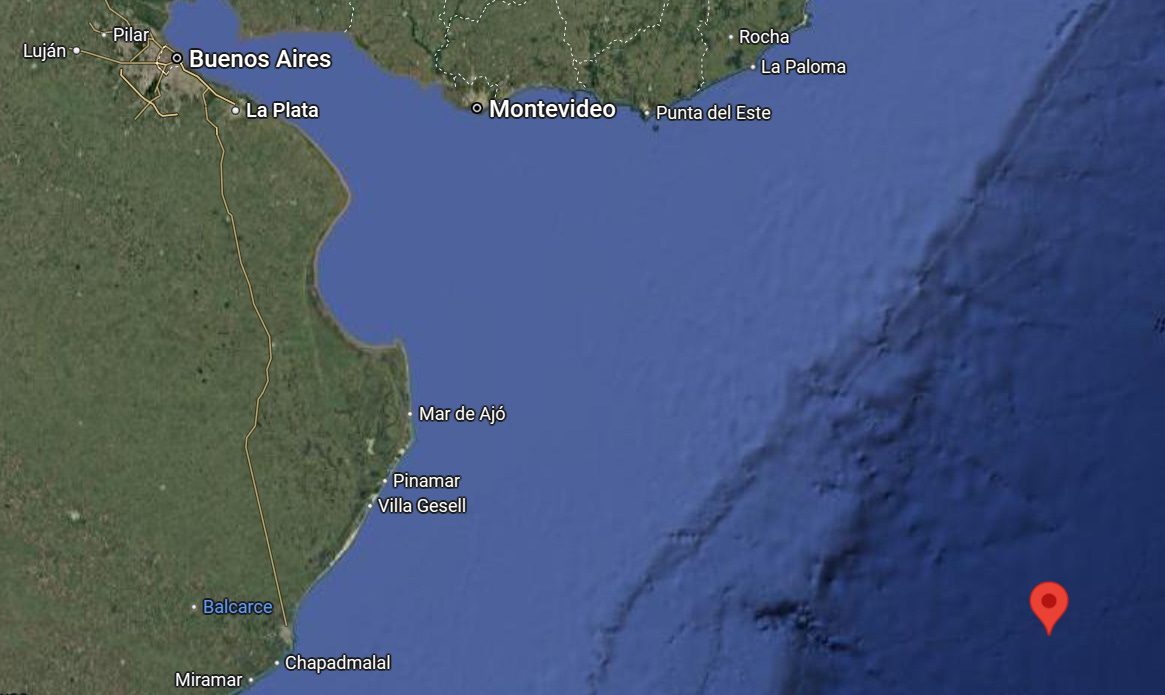
Repairs were completed there, and the Stockbridge was able to continue its progress towards Cape Horn. About three weeks later, on the west side of Cape Horn, the ship encountered more severe winds, which did further damage to the ship’s yards (the horizontal spars that the sail hangs from). Nevertheless, it was able to proceed and, about three months later, it arrived at its destination. The trip from Liverpool had taken 186 days to complete.
After arriving in San Francisco, Harry did not waste time in finding his next gig. He found a placement on a newly built brig called the Courtney Ford.2 This brig (which is a ship that’s smaller than a bark like the Stockbridge, but with a different configuration of masts and sails than a schooner like the Bessie Parker) was built to carry lumber between Puget Sound and San Francisco.
Whaling and Beyond
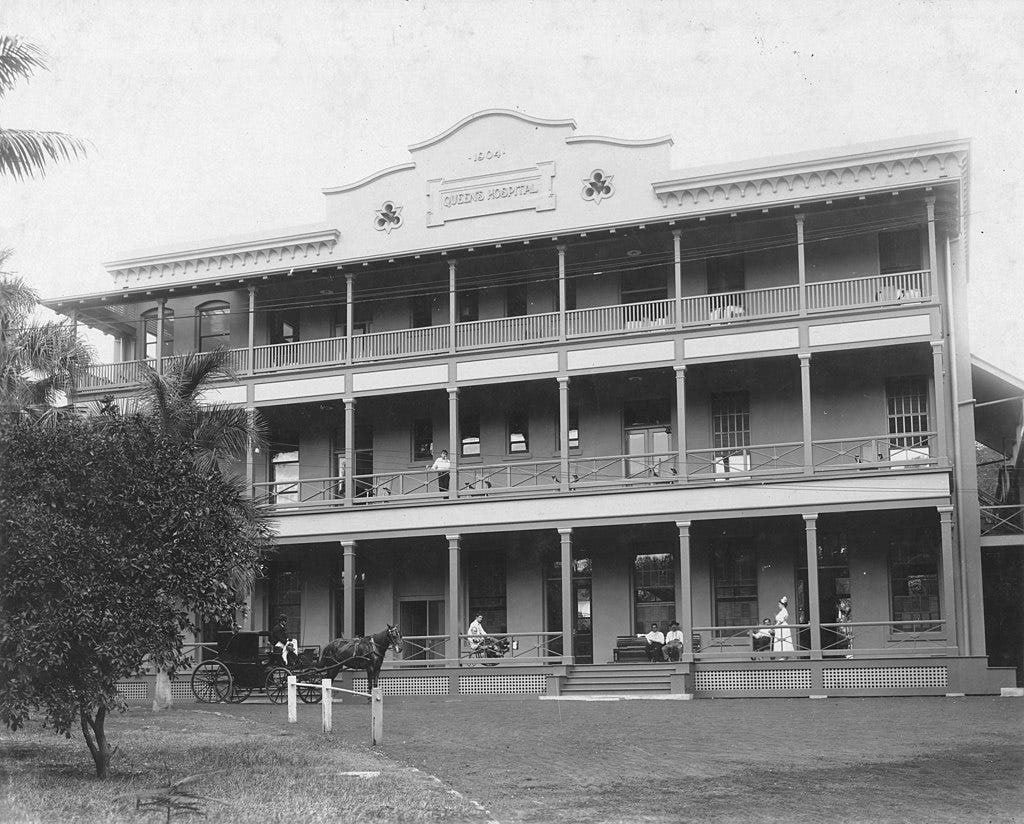
Eventually, Harry joined up with a New Bedford whaling crew. The article does not list the name of the ship unfortunately nor does Harry’s name appear in the list of the New Bedford Whaling Crews that is currently available. He worked on this ship for seven months and had many tales “of the harpooning of the giant sea mammals and of how the oil was procured from the carcass,” which the article unfortunately (or fortunately?) does not record. Eventually, he disembarked in Honolulu to be treated for rheumatism at the Queen’s Hospital.3 Interestingly, at this point in Hawaii’s history, it was still an independent kingdom, distinct from the United States.4
I had planned on doing a detailed blow-by-blow account of Harry’s seafaring adventures, but the article itself does this and it becomes quite difficult to follow. I’ve tried to summarize that below — I suspect any one of these bullets could yield a lot of other interesting information:
- After his treatment is complete, he joins a ship called the Alameda to travel back to San Francisco from Honolulu and makes several further trips with this ship.
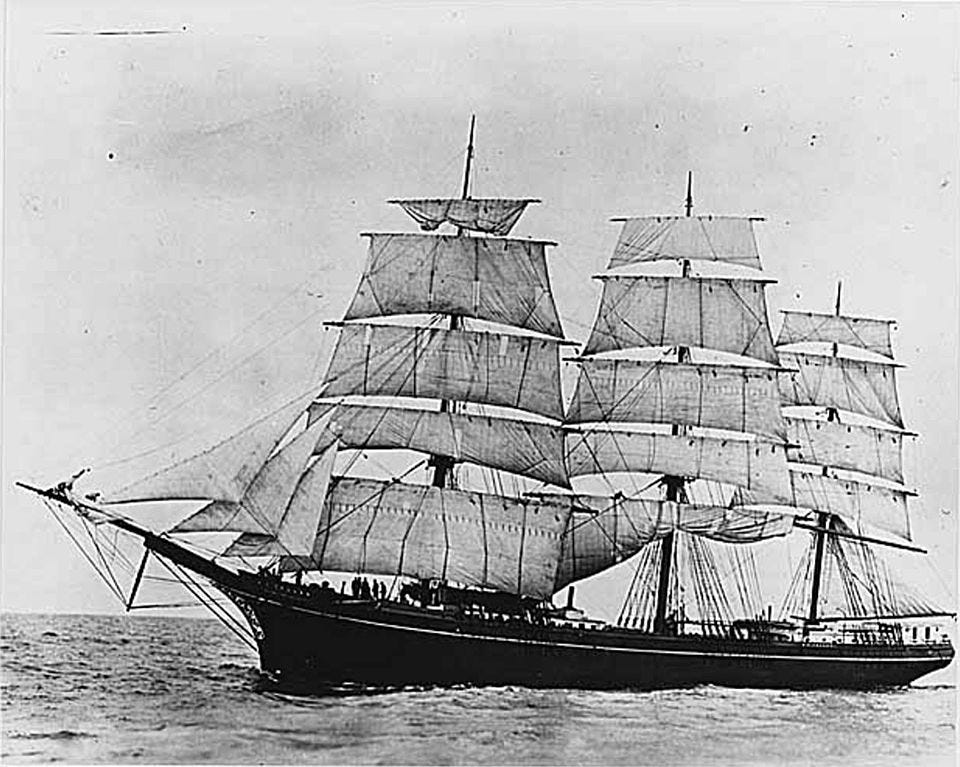
- He signs on with an American ship called the A.J. Fuller, which travels to Liverpool with a cargo of wheat. (This ship eventually sank off the coast of Seattle in 1918).
,_a_full_rigged_sailing_ship_at_sea.jpg)
- He boards a bark called the British Army and travels all the way to Sydney, New South Wales, and then to Queenstown.
- He travels to New York and then back to Queenstown aboard a bark called the St. David.
- He boards the Lucy Pope in Queenstown and travels to Souris, P.E.I. The trip takes 85 days!
- Staying with that same ship, he sails to Britain, but is forced to turn back after the ship is battered and eventually towed back to Murray Harbor in P.E.I. by the S.S. Northern Light. Bissett then travels back to Saint John with his brother George. (See below for more on him.)
- Harry and his brother embark upon several trips with the ship that George captained, the George Middleton, including to the West Indies and the Bay du Vin in New Brunswick.
Harry continued on with his brother after the latter took command of the John McLagglan, which was the last ship that Harry sailed in. Aboard the McLagglan, Harry travelled to Dundrum, Ireland (encountering a pretty significant gale along the way that tore the ship’s masts away), St. Thomas Island, San Juan in Puerto Rico, and the Turks Island in the West Indies. Upon reaching its port in Boston on Christmas Day, Harry retired from the sea and returned home to Saint John.
The 1891 census lists Harry as a barber, which he claims to have learned while on leave in Honolulu is true, then he would have taken up this career before his 26th birthday.
Still, although his professional seafaring days were now behind him, it seems that he did not abandon the sea. In a 1911 edition of Lloyd’s Register of Yachts, an H.H. Bissett is listed as the owner of a small, wooden sloop called the Viking, built in 1899. Apparently, it’s true that you can take the sailor out of the sea, but you can’t take the sea out of the sailor.

Seafaring Folks
Harry’s older brother, George, was called, in his obituary, “one of St. John’s best known citizens having been commanding officer of the Lansdowne for sixteen years” (The St. John Standard, Jun 5, 1909). Harry had at least one other sailor among his brothers (Capt. Stephen Bissett, who sailed out of a port in Boston) as well as brothers-in-law who commanded ships.
As mentioned above, Harry’s father, Andrew, had been a renowned sailor as well. His father, William, had come to Canada after the death of his father in a prisoner-of-war camp in Pennsylvania following the American Revolutionary War (which I’ve written about briefly here). It’s not clear to me how Andrew first took to the seas — but that is perhaps a topic for a different post.
Barbery and Insurance
Harry spent most of his life not as a sailor but as a barber. At the turn of the last century, the population of Saint John was approximately 40,000 people. It seems that he was something of a fixture in Saint John, as I think barbers tended to be.
He was also, apparently, an inventor:
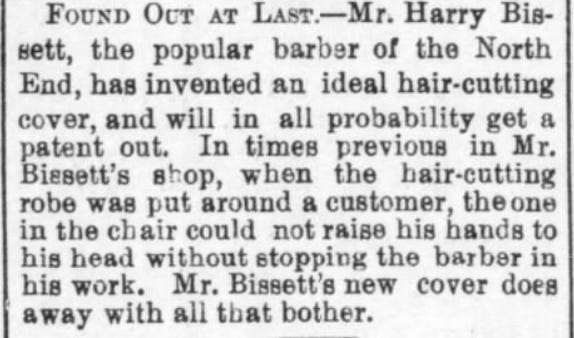
I can’t find evidence of this patent having gone through. I also can’t quite picture just what the invention was. Maybe it was a cover with sleeves?
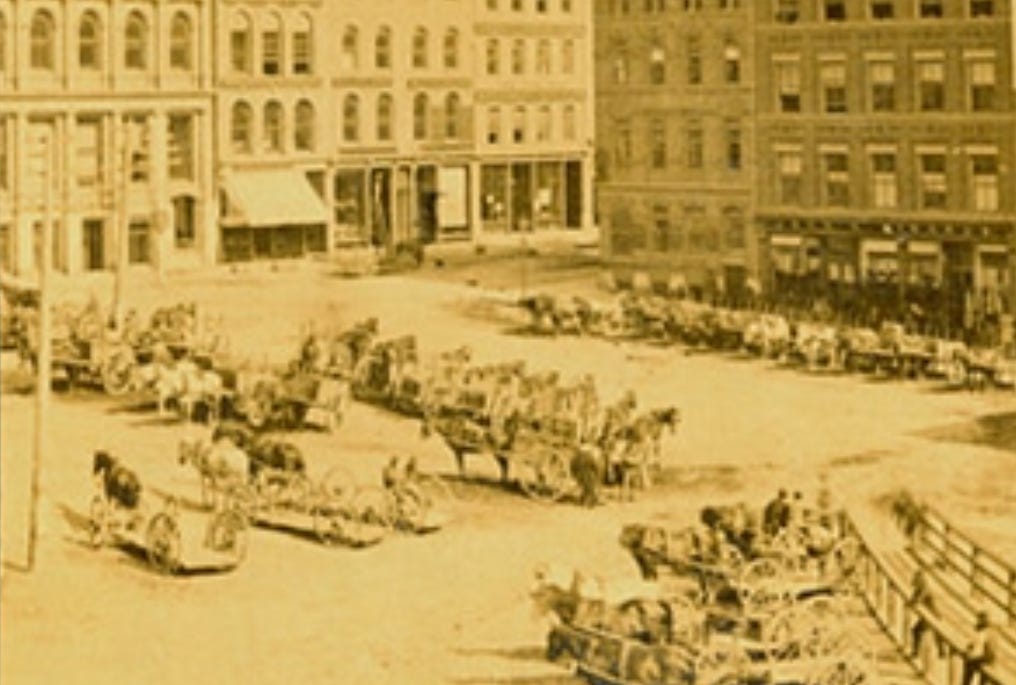
In 1899, Harry moved from the shop he had occupied on Princess Street to one on the corner of Market Square and Prince William Street. This would have been a relatively new space given that the Great Fire of Saint John happened only a little over 20 years earlier in 1877. That fire started on Prince William Street and, in less than ten hours, had burnt two-thirds of Saint John and most of the commercial district to rubble.
I don’t know if Harry ever encountered pirates during his years as a sailor — it doesn’t seem likely! As a barber, though, he encountered at least one pirate in the form of a cattleman named James Clements. In 1908, Clements was arrested and found guilty of stealing several items from Harry’s barber shop. He was sentenced to four months with hard labour.
Harry hung up his scissors in 1929, a few months before the article appeared describing his years at sea. After this point, he appears to have made some income selling insurance, although there is not much description of what this entailed. Life insurance was increasingly popular in the late 1920s. According to one article from 1929, ordinary life insurance sales in Canada increased by 11 percent over the previous year. It seems Harry may have helped with some of that increase.
Harry Havelock Bissett passed away on March 22, 1941 in Saint John. I love the closing lines of his obituary:
“He was a man of wide acquaintanceship and enjoyed the respect, not only of his large patronage, but of all residents. Mr. Bissett belonged to a family long identified with the useful life of the community.”
That seems like a good goal to have.
- The article lists the ship that Harry sails on as the Annie M. Parker, but as far as I can tell, this ship did not get launched until 1902, after Harry had already become a barber. An article from January of that year notes that the Annie M. Parker was captained by a man who had previously captained a ship called the Bessie Parker. The Bessie Parker was one of the first ships commissioned by Jacob Valentine Troop, whose son was Howard D. Troop, who took over the family business in 1881. ↩︎
- A November 15, 1883 issue of The Sacrament Union indicates that the Courtney Ford was launched on November 14, a mere week before Harry arrived in San Francisco. It’s not clear when he actually started working on the ship, but it would have been pretty spick and span. ↩︎
- The Queen’s Hospital, incorrectly named “Queen Anna Hospital” in the article, was founded by Queen Emma and King Kamehameha IV in 1859. A major driver of the hospital being founded was the protection of the Hawaiian native people, whose population was being decimated by epidemics brought to the island by foreign visitors. ↩︎
- Hawai‘i was an independent kingdom until 1893, when the monarchy was overthrown by American and European landholders. (I found this pretty horrifying to read about!) It spent the next three or four years as a republic, after which it was made an official U.S. territory in 1898. Sixty years later, on August 21, 1959, it became a U.S. state. ↩︎